Military Retirement Pay
Modernizing Military Retirement Pay
Over 2.3 million retirees depend on DFAS for accurate, timely, retirement pay, yet, the system managing those payments are build on 8 separate COBOL application, each siloed and difficult to maintain. The DRAS Modernization project set out to consolidate this fragmented since into a single Java application.
COMPANY
IBM
MY ROLE
UX Researcher and Designer
TIMELINE
May 2024 - Present
Context
A fragmented system in need of unification
The current DRAS ecosystem is made up of 8 disparate COBOL systems, each with its own distinct data structure and management. For the specialists who use these systems daily, this results in constantly context-switching between screens, re-entering duplicated data, and piecing together a complete picture of an account using multiple sources.
Beyond the daily users, this fragmentation has made also made it increasingly difficult to maintain, particularly when legislation and policy changes occur. In addition, the systems currently rely on nightly batch processing that add delays and friction in the workflows of its users.
The modernization efforts aim to consolidate all 8 systems into a single unified Java application. The first phase of this project is a 1:1 conversion of migrating the existing COBOL into Java without changing functionality to establish a stable foundation for additional data and UX enhancements in future phases.
Modernized
DRAS Application
Before - 8 COBOL Systems
After - 1 Unified Java Application
RCPS
CRSC
FS
NOD
ALLOTS
VSI
Process
Co-Innovation Workshops
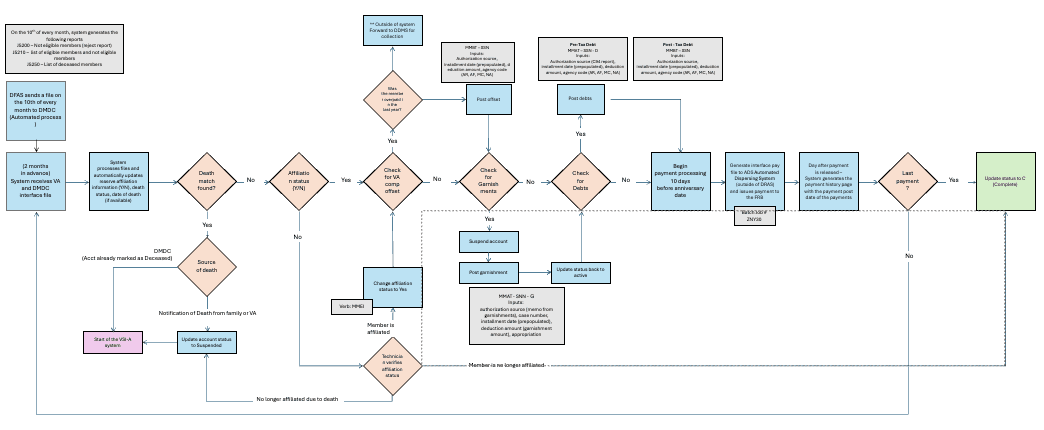
Phase 1 of DRAS-M is a 1:1 COBOL-to-Java conversion. With the focus on the conversion being functionally identical and no new features, we needed to devise a plan to prove that the new codebase functions like the legacy one.
To understand how te system is currently being used, I conducted broke down each system and walked through with the users what the system is, how it works, and how users use the systems.
30+
50+
sessions across 8 systems
SMEs engaged across 8 systems
Outputs
User Stories and Test Scripts
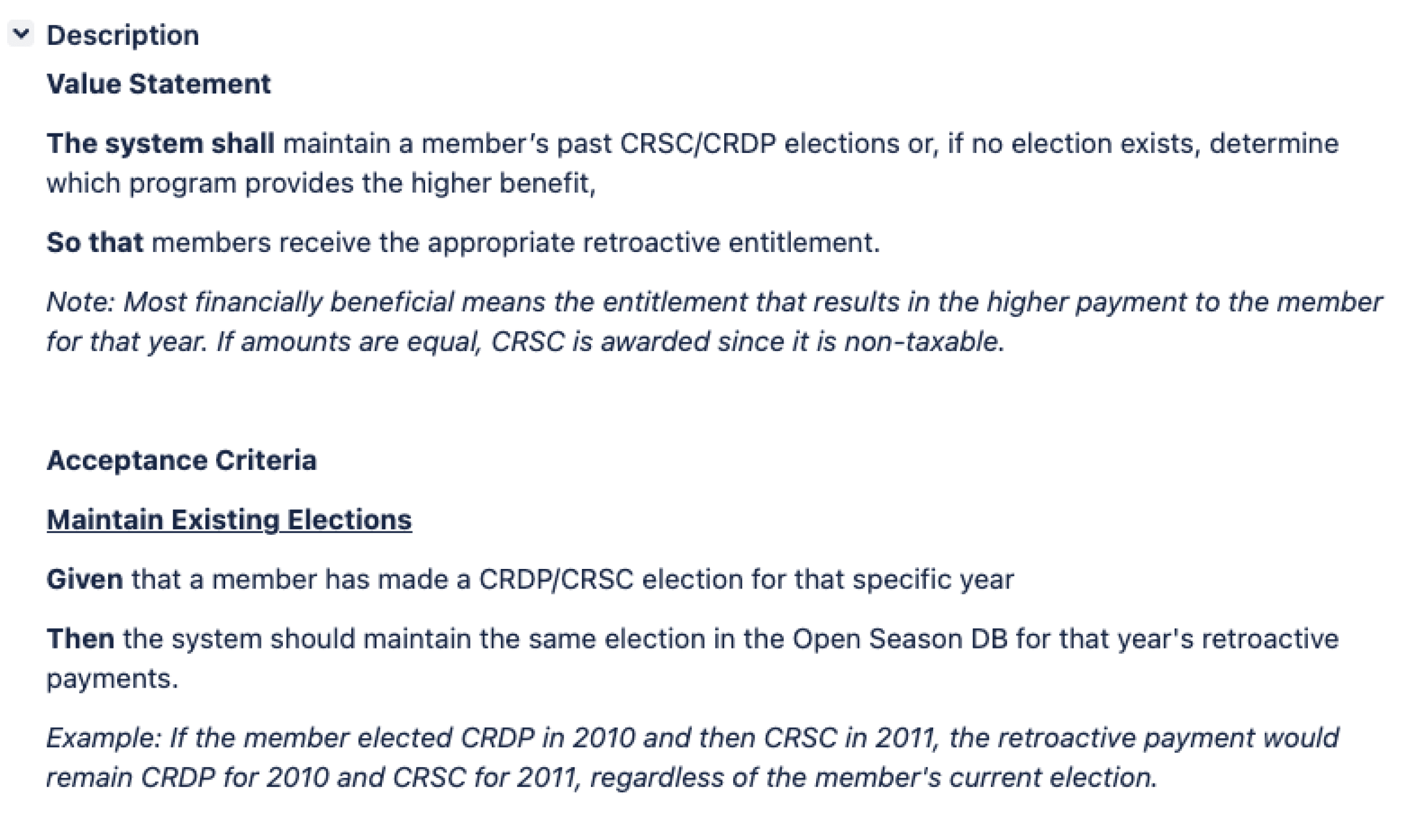
Workshop findings were translated into two core deliverables, user stories and test scripts. They were then validated with the client to define the scope of testing.
300+
User Stories
Identify and refine requirements to define the acceptance criteria of user stories
350+
Test Cases/Scripts
Detail how the functionality will be tested by documenting the inputs, user actions, and expected outputs.
Future State UI
Reimagining the Future
While the Java conversion is still underway, the workshops revealed some early pain points that users were facing.
What we heard in the workshops:
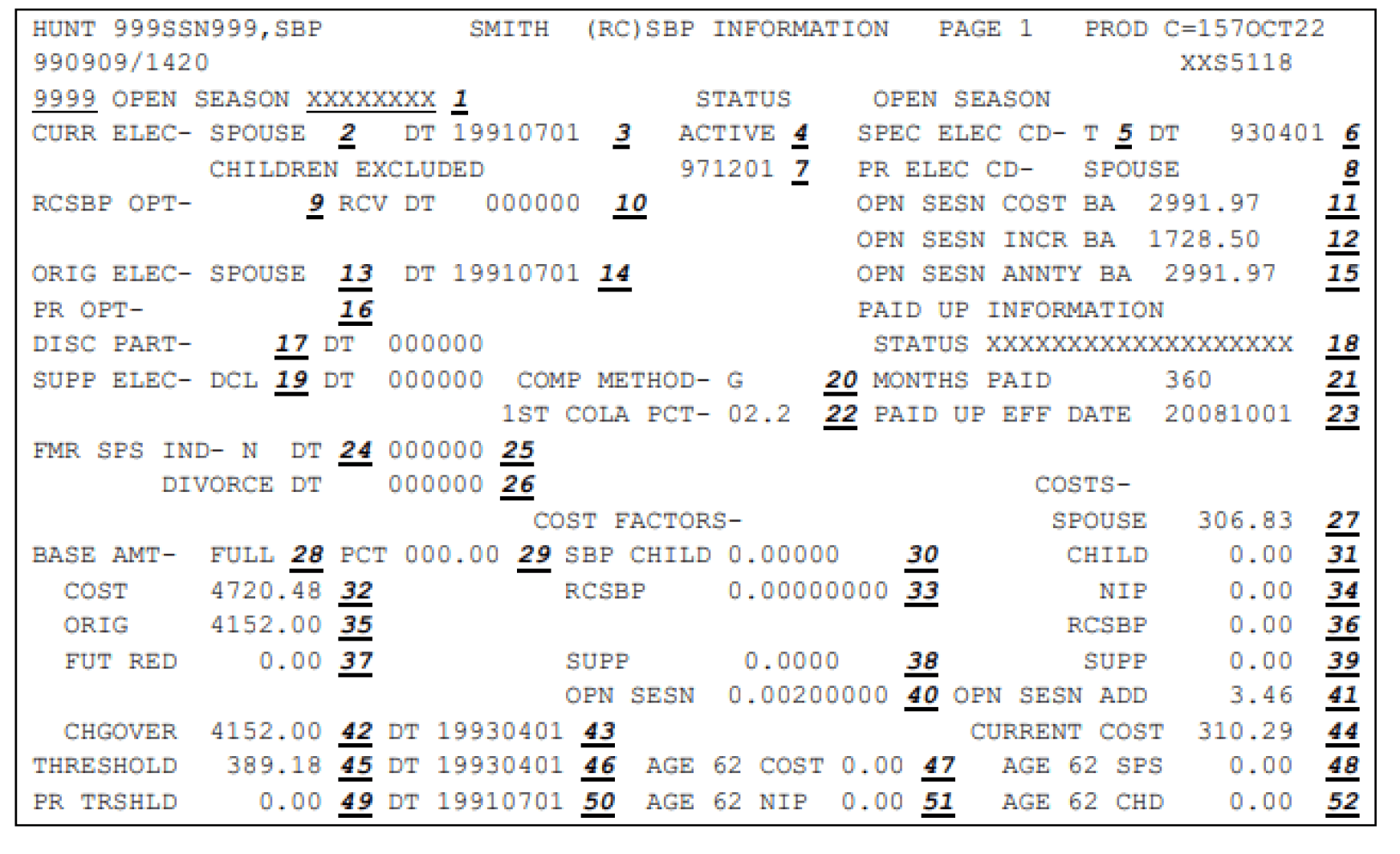
Users repeatedly described jumping between multiple inquiry screens to piece together information on a single retiree. Details about the retiree lived in separate spaces and often showing similar duplicated fields.

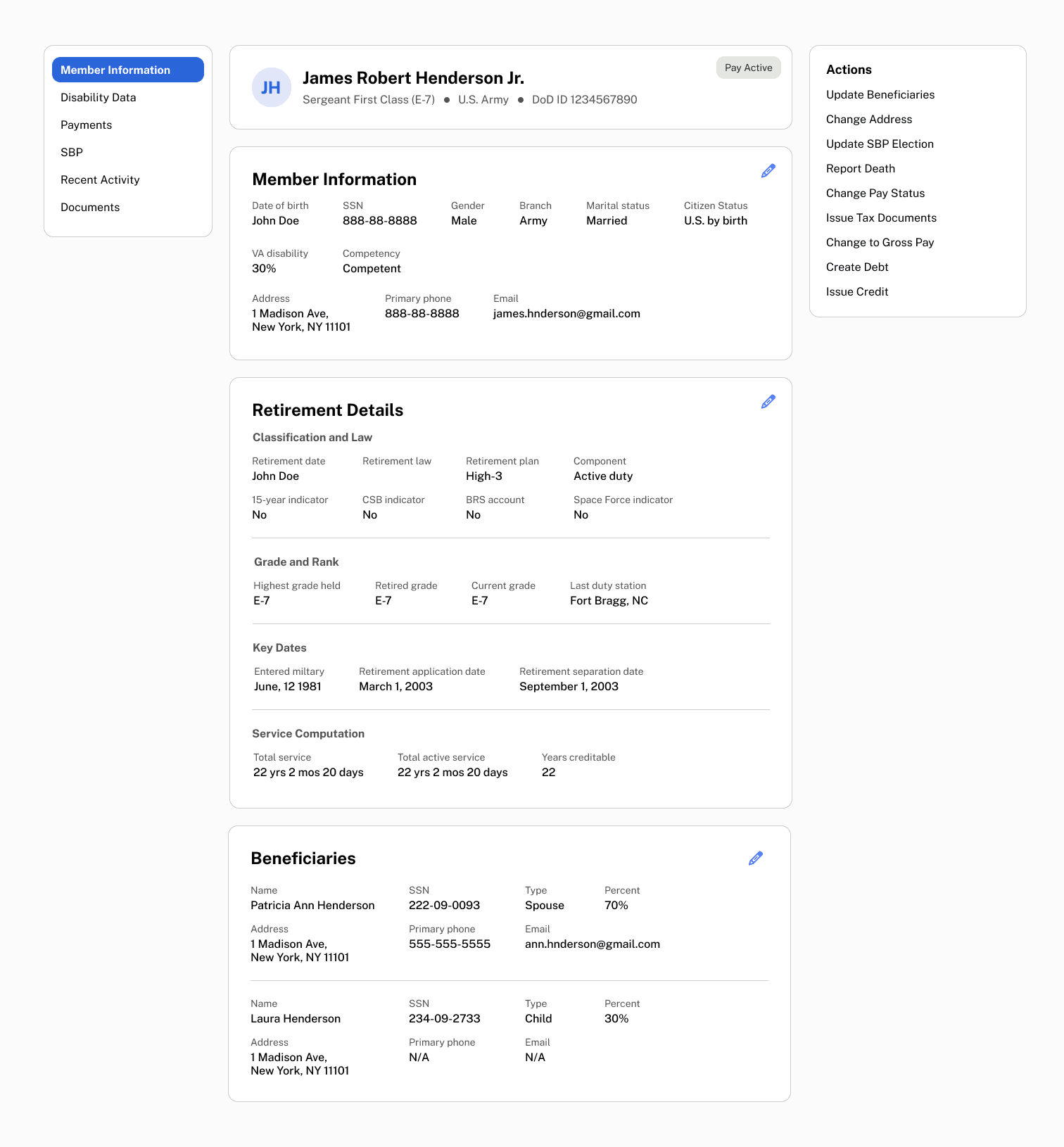
While Phase 2 has not yet begun, I developed an early design direction to capture what a consolidated interface could look like, and to provide stakeholders a vision to react to while targeting some main paint points
Left Navigation - No more context switching. Move between information without existing the current system.
Grouped Profile View - Member information grouped and consolidated into one scannable screen.
Actions Panel - Common tasks surfaced where users need them, eliminating unnecessary navigation.
While this is just a starting point, Phase 2 would build on this direction through additional Co-Innovation Workshops. Using methods like card sorting and tree testing, this will provide insight into how specialists actually think about and query member data and ground the final information architecture.
Next Case Study:
Streamlining Payment Authorization